
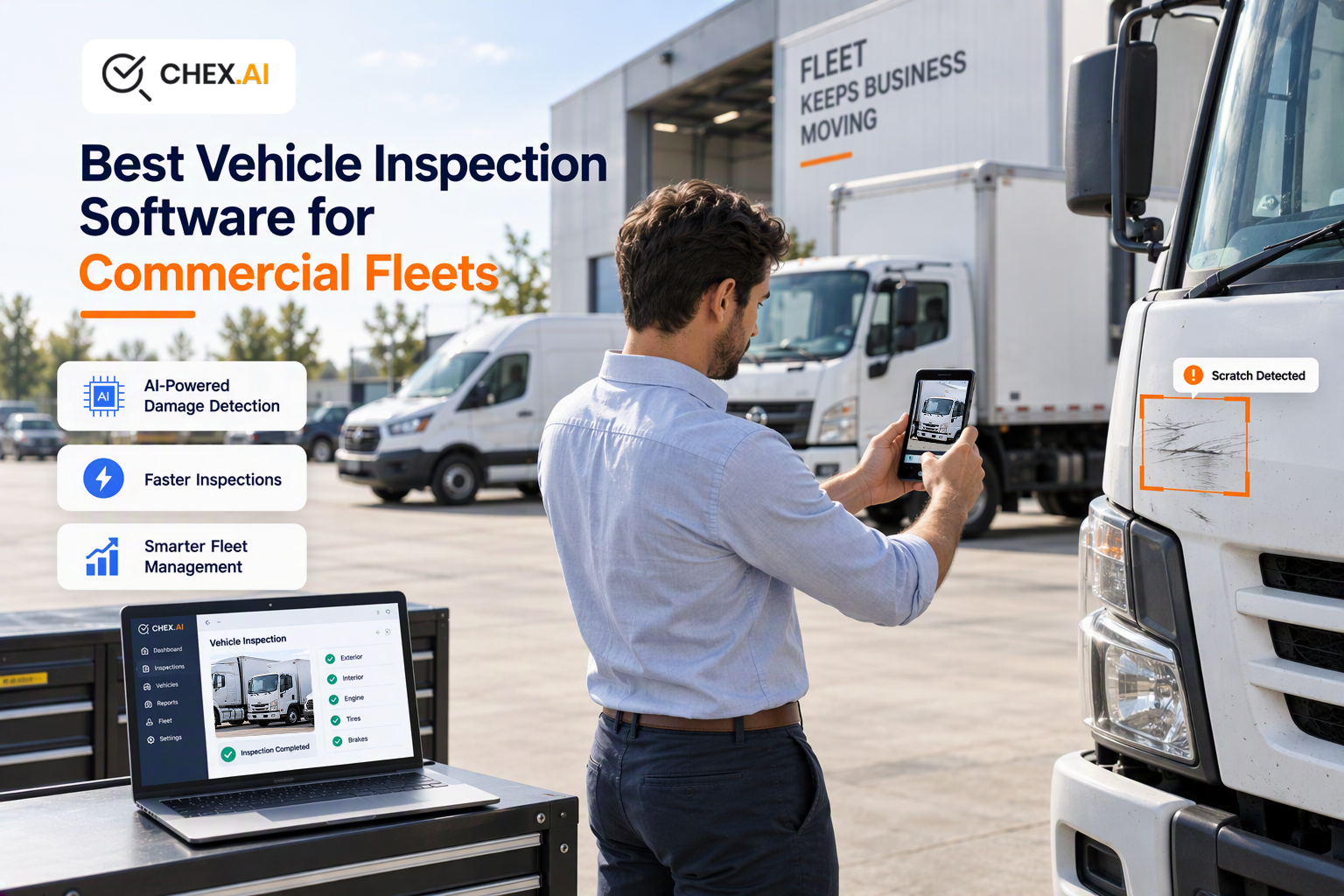
Quick answer: The best vehicle inspection software for commercial fleets combines digital DVIRs, AI damage detection, automatic VIN and odometer capture, and a central compliance dashboard. Chex.AI is a strong choice for fleets that want AI-powered damage documentation from a smartphone, while platforms like Samsara, Fleetio, Whip Around, and Motive suit fleets focused on telematics, maintenance, or ELD-led workflows.
Commercial fleets live and die by uptime. Every truck stuck in a yard waiting for a manual walkaround, every damage dispute without photo proof, and every missing inspection report during a DOT audit costs real money. That is why more fleet managers are replacing clipboards and paper checklists with dedicated vehicle inspection software.
This guide explains what fleet inspection software does, which features matter most, how the leading tools compare, and how to choose the right platform for your trucks, vans, and commercial vehicles.
What Is Vehicle Inspection Software for Commercial Fleets?
Vehicle inspection software is a digital tool that lets drivers, inspectors, and fleet managers record a vehicle’s condition, flag defects, and store inspection reports electronically. Instead of paper forms, drivers complete inspections on a phone or tablet, and the results flow straight into a dashboard where managers can review, approve, and schedule repairs.
Modern platforms go further by using artificial intelligence. With AI vehicle inspection software, a driver captures guided photos of the vehicle and the system automatically detects and documents damage, reads identifying information, and produces a standardized report in minutes.
Why Commercial Fleets Need Digital Inspection Software
DOT and FMCSA Compliance
In the United States, the FMCSA rule at 49 CFR §396.11 governs Driver Vehicle Inspection Reports. Under that rule, carriers must repair any listed defect likely to affect safe operation before a driver takes the vehicle out, and they must keep the original report along with the repair and review certifications for three months. FMCSA guidance also confirms that carriers may use any type of DVIR as long as it contains the required information and signatures, which is why digital DVIR formats have become the standard for growing fleets. untdot
Digital inspection software makes this easy. Reports are timestamped, signed, stored, and searchable, so audits stop being a scramble through filing cabinets.
Fewer Damage Disputes
When a van comes back with a new dent, the first question is always “when did that happen?” Timestamped photo evidence answers that instantly. Fleets that document vehicle condition at every handoff reduce disputes with drivers, contractors, customers, and insurers.
Faster Maintenance and Less Downtime
Paper reports often sit in a cab or an inbox for days. Digital inspections send defects to the maintenance team immediately, so small issues get fixed before they turn into roadside breakdowns.
Driver Accountability
Digital workflows show exactly who inspected which vehicle and when. That visibility encourages thorough inspections and makes it obvious when a check was skipped.
Key Features to Look for in Fleet Inspection Software
Before comparing vendors, it helps to know what separates a good platform from a basic checklist app.
Digital DVIR and customizable checklists. The software should support pre-trip and post-trip inspections with checklists you can tailor to each vehicle type, from box trucks to cargo vans.
AI damage detection. Manual photo uploads still depend on a human to spot problems. AI damage detection automatically identifies scratches, dents, cracks, and other damage, so every vehicle is assessed to the same standard.
Automatic data capture. Look for tools that read the VIN, license plate, and odometer from images. This removes typing errors and speeds up every inspection.
Image quality checks and fraud prevention. Blurry, reused, or manipulated photos undermine your records. The best platforms catch these issues before the report is submitted.
Central dashboard and reporting. Managers need one place to see inspection status, compliance rates, open defects, and vehicle history across the whole fleet.
Integrations. Inspection data is more valuable when it connects to your telematics, maintenance, and fleet management systems.
Mobile-first design. Drivers should be able to finish an inspection quickly on their own phone, without special hardware or training sessions.
Best Vehicle Inspection Software for Commercial Fleets
1. Chex.AI Best for AI Damage Detection and Smartphone Inspections
Chex.AI is an AI vehicle inspection platform that turns a smartphone camera into a complete damage detection and reporting tool. For commercial fleets, Chex.AI supports digital DVIRs and AI damage documentation for trucks, vans, and commercial vehicles, with configurable inspection workflows and a single dashboard for monitoring compliance.
Chex.AI detects damage across 163 vehicle parts with 95 to 99% accuracy, identifies 21 distinct damage types, and auto-reads the VIN, plate, and odometer. It also flags blurry, duplicate, or manipulated images, guides drivers to recapture incomplete shots, and converts detected damage into a cost estimate automatically. chex
Key strengths:
- AI damage detection across 163 vehicle parts
- Digital DVIR workflows built for commercial fleets
- Automatic VIN, plate, and odometer capture
- Real-time fraud and image quality checks
- Automatic repair cost estimates
- Works from any smartphone, with no hardware required
- Standardized reports usable for compliance, claims, and maintenance
Best for: Delivery fleets, DSPs, trucking companies, and commercial operators who want consistent, audit-ready damage documentation without manual walkarounds. Learn more about Chex.AI commercial fleet inspections or view commercial fleet pricing.
2. Samsara Best for Fleets Already Using Connected Telematics
Samsara is a connected operations platform known for telematics, GPS tracking, dashcams, and ELD compliance. Its driver app includes DVIR functionality, which makes it a natural fit for fleets that already run Samsara hardware. Fleets that need deeper AI damage detection can pair telematics platforms like Samsara with a specialized inspection tool such as Chex.AI.
Best for: Mid-size and large fleets that want inspections inside a broader telematics ecosystem.
3. Fleetio Best for Maintenance-Focused Fleets
Fleetio is a fleet maintenance and asset management platform. Its mobile app lets drivers complete inspections, and failed items can feed into service and work order workflows. It is popular with fleets that prioritize maintenance scheduling, parts tracking, and cost reporting.
Best for: Fleets whose main goal is organizing maintenance and repair history.
4. Whip Around Best for Simple DVIR Workflows
Whip Around focuses on digital vehicle inspections and DVIR compliance, with customizable forms and defect reporting that routes issues to maintenance. It is a straightforward option for fleets moving off paper for the first time.
Best for: Small to mid-size fleets that want an easy, checklist-driven DVIR app.
5. Motive Best for ELD-Led Compliance
Motive (formerly KeepTruckin) offers ELDs, dashcams, and fleet management tools, with DVIR features built into its driver app. It suits trucking fleets that want hours-of-service compliance and inspections in one driver experience.
Best for: Long-haul and regional trucking fleets focused on ELD compliance.
Comparison Table Fleet Inspection Software at a Glance
| Software | Digital DVIR | AI Damage Detection | Auto VIN/Odometer Capture | Fraud Detection | Hardware Needed | Best For |
|---|---|---|---|---|---|---|
| Chex.AI | Yes | Yes (163 parts, 21 damage types) | Yes | Yes | No, smartphone only | AI damage documentation and compliance |
| Samsara | Yes | Not the core focus | Varies | Not the core focus | Telematics hardware typical | Telematics-led fleets |
| Fleetio | Yes | Not the core focus | Varies | Not the core focus | No | Maintenance management |
| Whip Around | Yes | Not the core focus | Varies | Not the core focus | No | Simple DVIR workflows |
| Motive | Yes | Not the core focus | Varies | Not the core focus | ELD hardware typical | ELD compliance |
AI Inspections vs Manual Inspections for Fleets
Manual inspections depend on who performs them. One driver may notice a hairline crack while another walks right past it. Results vary, records are inconsistent, and the process takes vehicles off the road.
AI inspections apply the same standard to every vehicle, every time. The system documents damage automatically, timestamps every image, and creates a consistent report that holds up during audits, insurance claims, and driver disputes. For a deeper breakdown, read AI Vehicle Inspection vs Manual Inspection Which Is Better?
How to Choose the Right Vehicle Inspection Software
Start with your biggest problem. If damage disputes and claims are costing you money, prioritize AI damage detection. If maintenance delays are the issue, prioritize defect routing and work orders. If audits worry you, focus on DVIR compliance and record retention.
Check what you already use. If your fleet runs a telematics or maintenance platform, choose inspection software that complements it rather than duplicating features.
Consider your drivers. The best software is the one drivers actually use. A guided, mobile-first workflow with clear photo prompts leads to better data and fewer skipped inspections.
Look at total cost. Compare per-vehicle or per-inspection pricing against the time saved, disputes avoided, and repairs caught early. Hardware-free tools usually cost less to roll out across a large fleet.
Ask for a demo. Test the platform with a few real vehicles before committing. You can request a Chex.AI demo to see AI fleet inspections in action.
Who Benefits Most From AI Fleet Inspection Software?
Delivery service partners and last-mile fleets benefit from fast daily inspections across large van fleets. Trucking companies gain cleaner DVIR records and fewer roadside violations. Leasing and rental operators get reliable condition reports at every handoff, which is why many also use dedicated rental car inspection software. Fleet insurers use standardized inspection data for underwriting and claims through AI insurance inspections. Towing and valet operators protect themselves from false claims with digital vehicle condition reports.
If your fleet operates in the UK, see how AI vehicle inspection supports UK dealerships and fleets.
Frequently Asked Questions
What is the best vehicle inspection software for commercial fleets?
The best option depends on your priorities. Chex.AI is a strong choice for fleets that want AI damage detection, automatic data capture, and digital DVIRs from a smartphone. Samsara and Motive suit telematics and ELD-focused fleets, while Fleetio and Whip Around suit maintenance-led and checklist-based workflows.
Is electronic DVIR software allowed by the FMCSA?
Yes. FMCSA guidance states that carriers may use any type of DVIR as long as it contains the required information and signatures. Electronic DVIRs are widely used to meet 49 CFR §396.11 requirements.
How long must fleets keep DVIR records?
Under 49 CFR §396.11, carriers must keep the original DVIR, the certification of repairs, and the driver’s review certification for three months from the date the report was prepared.
How does AI vehicle inspection work?
A driver captures guided 360-degree photos of the vehicle with a smartphone. The AI analyzes each image, detects damage, reads the VIN, plate, and odometer, and generates a standardized digital inspection report in minutes.
How accurate is AI damage detection?
Chex.AI detects damage across 163 vehicle parts with 95 to 99% accuracy and identifies 21 types of damage. It also flags low-quality or manipulated images before they reach the final report.
Does fleet inspection software require special hardware?
Not always. Telematics-based platforms often rely on in-vehicle devices, while AI inspection tools like Chex.AI work entirely from a standard smartphone.
How much does fleet inspection software cost?
Pricing usually depends on fleet size, number of inspections, and features. You can review Chex.AI commercial fleet pricing or contact the Chex.AI team for a custom quote.
Final Thoughts
Choosing the best vehicle inspection software for commercial fleets comes down to compliance, consistency, and speed. Paper checklists cannot keep up with modern fleet demands, and basic photo apps still leave damage assessment to human judgment. AI-powered platforms deliver standardized, audit-ready reports in minutes, helping fleets reduce disputes, catch maintenance issues early, and stay DOT compliant.
If you want to see how AI can transform your fleet inspections, request a demo with Chex.AI and inspect every vehicle in minutes, not hours. For more insights, explore the Chex.AI blog.